Cumballa Hill · Mumbai
Book a Verified Physiotherapist at Home in Cumballa Hill
Cumballa Hill sits in South Mumbai between the Kemps Corner junction, Pedder Road and August Kranti Marg — a compact hill neighbourhood where older low-rise blocks still share the skyline with redevelopment towers. One address may mean several outdoor flights and a narrow landing; the next may mean a lift lobby, a visitor desk and a basement car park. Hospitals and clinics cluster along August Kranti Marg and the Kemps Corner approaches, so many households here are balancing outpatient reviews with the climb back home. This page shows Super Physio physiotherapists who list Cumballa Hill for home visits so you can open profiles, check qualifications and experience, and read session details before you request a slot. Exact building type, entry stairs and preferred hours still decide who can reach you. Keep the filter on Cumballa Hill while you adjust timing, or switch only if your pin is catalogued under Pedder Road, Breach Candy or Malabar Hill. Reading this guide is not the same as being assessed by a doctor or physiotherapist in person.
Verified profiles
Qualifications and experience are checked before physiotherapists go live.
Home visits
Sessions happen at your address — no clinic commute for every follow-up.
Transparent fees
See the session fee on each profile before you book.
Editable filters
Locality stays selected, and you can still change area or timing.
Home-visit physiotherapists serving Cumballa Hill
Filters below stay editable. Availability depends on your exact address and preferred time.
15 physios available for home visits in Cumballa Hill
Also available nearby
₹1500
per session
5+ yrs · Colaba · Cuffe Parade · +30 more
₹1500
per session
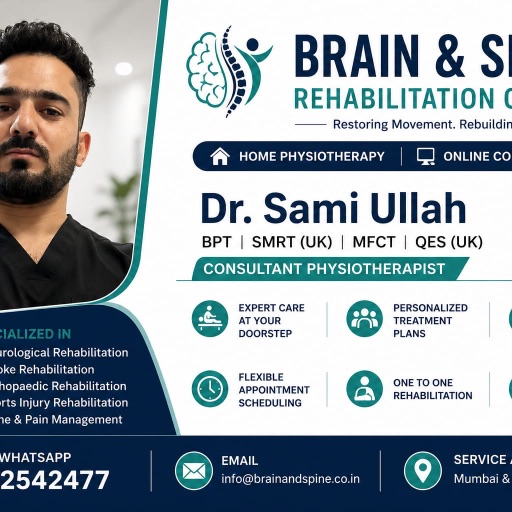
Dr. Sami Ullah is a physiotherapist specialising in Orthopaedic, Neuro, Sports, Post-operative, General physiotherapy, Pediatric, with 5+ years of experience. Available for home sessions in Colaba, Cuffe Parade, Nariman Point.
₹1500
per session

5+ yrs · Colaba · Cuffe Parade · +17 more
₹1500
per session
Dr. Ruttuja (Neuro MPT) is a physiotherapist specialising in Neuro, Geriatric, Post-operative, Women's health, Pediatric, with 5+ years of experience. Available for home sessions in South Mumbai
₹1500
per session

3+ yrs · Colaba · Cuffe Parade · +18 more
₹1500
per session
Dr. Mahima Chaudhari is a physiotherapist specialising in Orthopaedic, Sports, Post-operative, Women's health, Geriatric, Chronic pain, with 3+ years of experience. Available for home sessions in Colaba, Cuffe Parade, Nariman Point.
₹1500
per session

2+ yrs · Colaba · Nariman Point · +13 more
₹1500
per session
Dr. Neha Dhanokar is a physiotherapist specialising in Orthopaedic, Neuro, Geriatric, Post-operative, Women's health, General physiotherapy, with 2+ years of experience. Available for home sessions in Colaba, Nariman Point, Churchgate.
₹800
per session
2+ yrs · Colaba · Cuffe Parade · +19 more
₹800
per session
Dr. Madiha Ansari is a physiotherapist specialising in Neuro, Orthopaedic, Geriatric, Post-operative, Pediatric, General physiotherapy, Chronic pain, with 2+ years of experience. Available for home sessions in Colaba, Cuffe Parade, Nariman Point.
₹1000
per session

2+ yrs · Ghatkopar · Ghatkopar East · +20 more
₹1000
per session
Dr. Riddhi Chheda is a physiotherapist specialising in Orthopaedic, Neuro, Sports, Geriatric, Post-operative, Women's health, Chronic pain, General physiotherapy, Pediatric, with 2+ years of experience. Available for home sessions and online consultations
₹1600
per session

1+ yrs · Marine Lines · Colaba · +15 more
₹1600
per session
Dr. Himanshu PATIL (PT) is a physiotherapist specialising in Orthopaedic, Neuro, Sports, Post-operative, Geriatric, Chronic pain, General physiotherapy, with 1+ years of experience. Available for home sessions in Marine Lines, Colaba, Cuffe Parade.
₹1200
per session

1+ yrs · Colaba · Cuffe Parade · +24 more
₹1200
per session
Dr. Fahad Malik (PT) is a physiotherapist specialising in Orthopaedic, Post-operative, Chronic pain, General physiotherapy, Neuro, Sports, with 1+ years of experience. Available for home sessions in Colaba, Cuffe Parade, Nariman Point.
₹1500
per session
1+ yrs · Nariman Point · Marine Lines · +13 more
₹1500
per session
Dr. Mahek Shah is a physiotherapist specialising in Orthopaedic, Neuro, Sports, Geriatric, Post-operative, General physiotherapy, Chronic pain, Pediatric, with 1+ years of experience. Available for home sessions in Nariman Point, Marine Lines, Churchgate.
₹1000
per session

8+ yrs · Colaba · Cuffe Parade · +38 more
₹1000
per session
Dr. Shreya Shah is a physiotherapist specialising in Orthopaedic, Neuro, Sports, Geriatric, Post-operative, Chest, Onco physiotherapy, Women's health, Pediatric, Chronic pain, General physiotherapy, with 8+ years of experience. Available for home sessions in Colaba, Cuffe Parade, Nariman Point.
₹1500
per session
5+ yrs · Colaba · Cuffe Parade · +17 more
₹1500
per session
Dr. Sayoni Shah is a physiotherapist specialising in Neuro, General physiotherapy, Pediatric, Chronic pain, Orthopaedic, with 5+ years of experience. Available for home sessions in Colaba, Cuffe Parade, Nariman Point.
₹1200
per session

5+ yrs · Malabar Hill · Colaba · +40 more
₹1200
per session
Dr. Omkar Motta is a physiotherapist specialising in Neuro, Orthopaedic, Chest, General physiotherapy, Chronic pain, with 5+ years of experience. Available for home sessions in Malabar Hill, Colaba, Cuffe Parade.
Showing 12 of 15
Who on Cumballa Hill usually needs care brought indoors
Home physiotherapy here most often helps people for whom the building itself, not just the diagnosis, makes clinic travel unrealistic. Residents in older low-rise stock — short compound steps, no lift, landings too tight for a walker beside a helper — book when another outing after a hospital review on August Kranti Marg would mean repeating the same climb. Families in redevelopment towers face a different barrier: lifts and lobbies help, yet society gates, visitor slips and evening congestion at Kemps Corner or Pedder Road can still turn a short appointment into a long escort. Older adults who have lived in the same walk-up for decades, people recovering after joint or spine procedures, and anyone unsteady on steep approach roads from the junction typically gain most from treatment in the rooms they actually use. Desk workers sometimes prefer a home slot when peak traffic on Pedder Road would wipe out the evening. The right plan still depends on hands-on assessment in your flat; this page only surfaces clinicians willing to travel to Cumballa Hill.
Once you book: confirmation, payment and finding the right block
After you choose a profile and complete booking, you should receive a confirmed window, the address you gave, and how payment is completed through Super Physio. Keep that confirmation ready for watchmen and for anyone meeting the therapist near Kemps Corner or on August Kranti Marg, where GPS can drift between older societies and newer towers. Say clearly whether the building is a low-rise walk-up or a lift-served redevelopment block, which gate to use, floor number, and whether outdoor steps sit before the lobby. Peak hours on Pedder Road and the junction can stretch travel; if a hospital review or family handover forces a change, use the confirmation path or Super Physio support to reschedule or cancel early. Policies can differ by booking — read what your confirmation states. Support can help when a slot needs sorting; clinical decisions stay with you, your doctor and the treating physiotherapist.
Walk-up landings versus tower lobbies as the treatment room
A Cumballa Hill visit is shaped by housing stock as much as by the clinical picture. In older low-rise buildings the physiotherapist may assess sit-to-stand on a small landing, corridor width that barely allows a stick and a helper, bathrooms with a raised sill, and how many outdoor flights separate the flat from the road. In redevelopment towers the focus often shifts to lift timing, lobby distances, furniture height and safer transfers inside a larger flat — yet the path from street to porch can still include a grade that stops an unsteady resident before they reach the call button. Share honestly which type of building you live in; that detail changes what is practical on day one. Clear a modest floor patch, keep walking aids nearby, and note any threshold or step that already feels risky. Plans stay individual; nothing here is a fixed exercise sheet for every address between Pedder Road and August Kranti Marg.
What family members on the hill should be ready to do
A caregiver need not attend every session, but the first visit is clearer when someone who knows the daily routine is present — especially after discharge, for an older relative, or when bathroom help is already part of the day. On Cumballa Hill that person can explain last-mile details the map misses: which approach from Kemps Corner or Pedder Road actually reaches the gate, whether the block is a walk-up or a tower, and how the therapist should enter if security wants names in advance. What they learn should be practical coaching — safer transfers on those landings or lift lobbies, pacing short indoor walks, and cues between appointments — not a homemade exercise programme copied from the internet. If the patient lives alone, say so when you book. Caregivers reinforce teaching; clinical judgement stays with the physiotherapist and treating doctor.
What home treatment gains here — and what it cannot replace
Treating at home keeps the patient off another circuit past Kemps Corner traffic and steep approach roads when standing through a clinic wait is the hardest part of the day. The clinician works in the building you actually live in, which matters when older walk-ups and new towers on the same hill demand different access plans. Practising transfers, short walks and bathroom thresholds where they happen every day is often more useful than a perfect gym floor elsewhere. Limits remain honest: a compact low-rise flat may lack space or clinic equipment; a tower visit still depends on society rules and lift access; and sudden emergencies belong in hospital, not on a scheduled home slot. Home physiotherapy does not replace imaging, medication decisions or your surgeon’s restrictions. Availability depends on who already covers Cumballa Hill and the window you request — empty results mean no matching slot that day, not that care is impossible forever.
Warning signs that need hospital care before any hill visit
Home physiotherapy supports planned rehabilitation; it is not emergency care. Seek urgent medical attention rather than holding a routine Cumballa Hill visit if you develop sudden severe pain, new weakness or numbness in a limb, chest pain or breathlessness, a painful swollen calf, fever with a hot or red joint, loss of bladder or bowel control, a surgical wound that is red, hot or discharging, a fall with head injury, sudden speech difficulty or confusion, or any post-surgical warning your surgeon listed. Nearby hospitals along August Kranti Marg and the Kemps Corner approaches do not make a scheduled home slot a substitute for casualty assessment. If unsure, contact your doctor or go to emergency care — do not intensify exercises while waiting. Once acute issues are ruled out and community physiotherapy is cleared, a home session can resume. Recovery speed varies; nobody can promise a fixed date.
Keeping gains going between sessions on Cumballa Hill
Progress after the first visit usually depends on what you practise between appointments, not only on how often someone arrives at the door. Expect a short home programme matched to your rooms — perhaps safer sit-to-stand on your usual chair, short corridor walks in a walk-up, or paced lobby loops in a tower — with clear limits drawn from your doctor or surgeon’s instructions. Review points matter: pain that is worsening, a new limp, dizziness on the outdoor steps, or a wound change should pause unsupervised practice until you have clinical advice. Frequency is individual; some people need closer early review after discharge from a nearby hospital, while others space visits once the routine is stable. Keep notes on which stairs, thresholds or lift timings still feel unsafe so the next session can adjust. This page cannot set your programme; only assessment in your flat can.
Frequently asked questions
+−Do Super Physio physiotherapists cover Cumballa Hill for home visits?
Yes. Cumballa Hill is an active Super Physio service area. Profiles shown with this locality selected list home visits here; final confirmation still depends on your exact building — walk-up or tower — entry rules and the time you request.
+−Can I book home physiotherapy on Cumballa Hill after surgery?
Often yes when your surgeon or treating doctor has cleared community physiotherapy and you can move safely enough for indoor work. Older low-rise blocks and redevelopment towers both host post-operative recoveries, but suitability still depends on the operation, wound status and stage of healing. Do not start or progress exercises from this page alone; follow the clearance and restrictions you were given.
+−What if no one is free at the time I prefer on Cumballa Hill?
Widen the time window first, or try another day, while keeping Cumballa Hill selected. You can also edit the locality chip to Pedder Road, Breach Candy, Malabar Hill or Mahalaxmi if that label matches your pin better. Empty results mean no matching slot for those filters — not that every clinician has permanently stopped serving the hill. Filters stay editable after the first search.
+−Is this page enough on its own, or do I still need a clinician to assess me?
You still need a clinician. This page is locality guidance for browsing Cumballa Hill home-visit profiles — it does not diagnose, prognose or prescribe exercises. Choices about load, progression and return to activity should follow hands-on examination by your doctor or physiotherapist.
+−What should I have ready at home for a Cumballa Hill session?
Usually very little: a firm chair, a clear stretch of floor, and any walker, stick or crutches you normally use. In a walk-up, clearing landing space and noting outdoor steps often matters more than buying machines; in a tower, confirm visitor and lift rules so the therapist can bring only what security allows. Keep bands or a discharge brace handy if you have them. Specialised clinic equipment is rarely required on day one.
+−How long is a typical session, and how often will I need visits?
Session length and frequency are set by the physiotherapist after assessing you — they are not fixed on this page. A first visit is often longer because it includes history and a look at your walk-up or tower environment; follow-ups may be shorter once a home programme is underway. Some people need closer early review after hospital discharge along August Kranti Marg; others space visits as indoor mobility improves. Ask what your chosen profile includes before you confirm.
+−How do I reschedule or cancel a Cumballa Hill home visit?
Use the path in your booking confirmation or contact Super Physio support as early as you can. Junction traffic at Kemps Corner and steep approach roads make last-minute changes harder once a therapist is en route. Read the cancellation or reschedule terms on your confirmation, since policies can differ by booking.
Sources
Educational information only — not personal medical advice. Recovery plans vary; follow your treating doctor or surgeon when their instructions differ.